
The Importance of Having a Hobby That Doesn’t Need to Become Anything
Lately, I’ve been thinking about hobbies.
Not the kind of hobbies we turn into goals, content, side businesses, or self-improvement projects.
I mean the quieter kind.
The things we do because they bring us pleasure. Because they awaken curiosity. Because, for a while, they let us enter a world that does not ask us to prove anything.
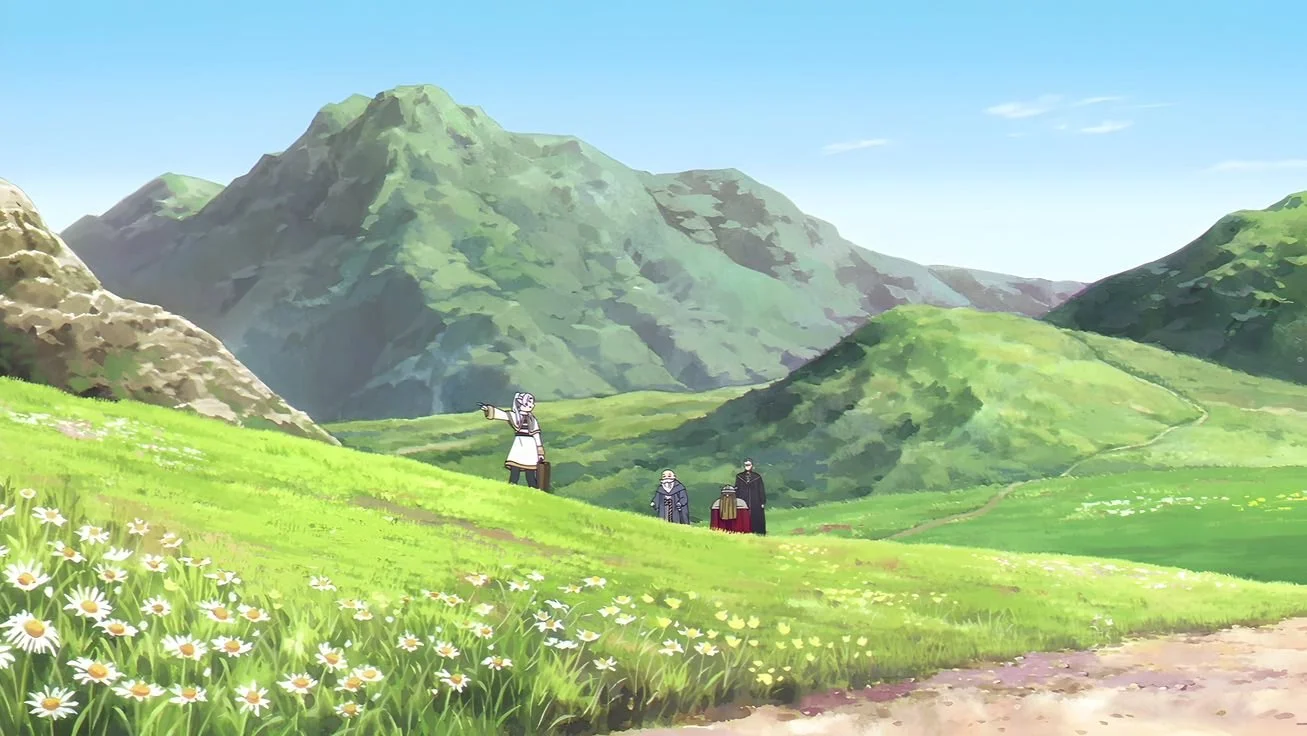
I started thinking about this while watching Frieren. There is a moment where someone asks Frieren why she collects magic, and her answer is beautifully simple: because it is her hobby.
That answer stayed with me.
There was no need to make it sound useful. No need to justify it as a career move, a strategy, or a personal development tool. She collects magic because she enjoys it. Because it matters to her in a way that does not need to become productive in order to be meaningful.
I think many adults have forgotten what that feels like.
At some point, many of us learned to treat our interests as raw material for productivity. If we read, the book should improve us. If we draw, the drawing should become content. If we learn something new, it should help our career. If we are good at something, maybe we should immediately turn it into a business.
But not everything we love has to begin as a product.
Some things first need space to exist as curiosity, pleasure, and attention.
This month, I noticed this in my own life in very small ways.
I ordered a stamp-shaped paper punch because I have always loved packaging, printed materials, tickets, magazines, and the little visual traces that places leave behind. Whenever I travel or visit somewhere new, I often want to keep something from that experience, but I never knew exactly how to preserve it. Now I can cut a small piece of paper, a label, a bag, or a page into the shape of a stamp. It has no bigger objective. I am not trying to sell it. I am not trying to turn it into a product. I simply like the idea of keeping tiny pieces of the world in a form that feels beautiful to me.
I also started collecting Pokémon cards and arranging them into little ecosystems, not because I know everything about them, but because I find them beautiful. And maybe that is enough.
Sometimes joy does not need a business model. Sometimes beauty does not need a purpose. Sometimes a hobby is just a small way of saying: this caught my attention, and I want to stay with it for a while.
Some parts of us do not grow through optimization. They grow through attention, curiosity, repetition, and play.
Donald Winnicott’s concept of “potential space” has helped me think about this differently. He described a space between inner reality and external reality where play, creativity, imagination, and cultural experience can emerge. It is the space where a child builds imaginary worlds, but also where adults read, make art, collect strange interests, follow curiosity, and create meaning.
A hobby can live in that space.
It does not have to be impressive. It does not have to lead somewhere. It does not have to become a project.
Sometimes, a hobby is simply a place where the self can breathe.
Stuart Brown’s work on play also reminds me that play is not something we leave behind in childhood. Play supports curiosity, flexibility, adaptation, and emotional vitality. It helps us explore the world without immediately turning every experience into performance.
I also thought about this while watching Toy Story 5. What moved me was not only the nostalgia of childhood play, but the reminder that imagination often happens with others. Screens can entertain us, and sometimes even make us feel connected for a moment. But they do not always replace the experience of being physically present with other people, sharing a world, a joke, a story, or a game.
This feels especially important in adult life, where so much of our time is organized around responsibility. We work. We plan. We solve. We respond. We manage. We try to become better versions of ourselves.
But a life built only around improvement can become strangely narrow. There has to be room for the things that do not make us more efficient, but make us more alive.
This month, while creating Imagination Club, I realized I did not want to build another space where people had to perform intelligence, productivity, or ambition. I wanted to create a space where adults could bring their inner worlds. A place to read whatever they wanted. To follow a strange curiosity. To talk about ideas before asking what they should become. To remember that imagination does not belong only to childhood.
That is part of what I want Imagination Club to protect: a space where adults can be with other adults, not only through likes, comments, or digital reactions, but through presence, conversation, and shared curiosity.
Maybe that is what hobbies protect too.
A small private world.
A part of us that still knows how to wonder.
A way of staying close to what brings delight, even when life becomes serious.
Not everything we love needs to become useful.
Some things are worth keeping simply because they help us feel connected to the experience of being here.
Maybe a hobby does not need to become anything.
Maybe its value is that, for a while, it lets us become ourselves again.
P.S. Thank you to my best friend for sharing Frieren with me. Happy birthday, this little piece carries one of the worlds you shared with me.
If you miss having interests that do not need to become content, goals, or businesses, Imagination Club can be a space to return to shared curiosity.
We meet once a month at BINAES to read, talk, and follow the strange little ideas that simply make us feel more alive.
Discover the next gathering here: https://beacons.ai/ascendiumdesign