
Psychology of Creativity: Field Note 01 · Imagination Club · October 2026
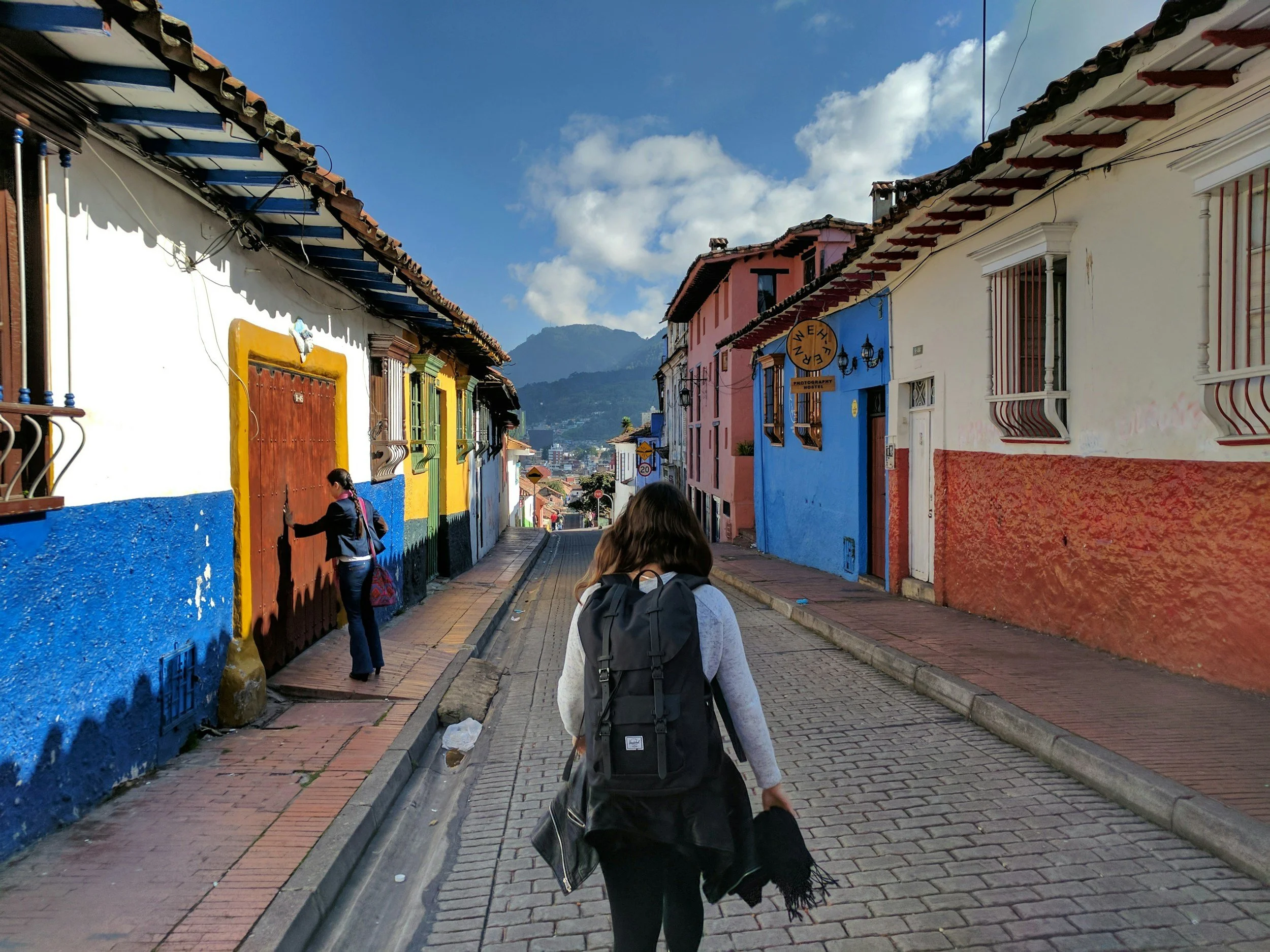
The first Imagination Club expedition began with a fairly simple prompt: spend thirty minutes walking around and photograph three things you would not normally consider worth photographing. It sounded easy, but during the walk I started noticing something: when we know a place too well, we also learn how to stop seeing it.
The activity was called Looking Again, and it grew out of a question that has stayed with me for some time: even when we cannot immediately change the circumstances around us, can we explore different ways of observing and interpreting them?
Photography felt like a good place to begin because it is already familiar to so many of us. We carry cameras in our pockets. We photograph our meals, our trips, and small moments from everyday life. But familiarity does not necessarily mean we are observing deliberately.
The question behind the activity was simple:
What might appear if we tried to look at a familiar environment from a different perspective?
A first approach to divergent thinking
After designing the activity, I began exploring the psychology of creativity more deeply through Felix Pinkow’s 2023 article, Creative cognition: A multidisciplinary and integrative framework of creative thinking.
Pinkow brings together different perspectives on the cognitive processes involved in creative thinking and examines, among other concepts, the relationship between divergent and convergent thinking.
Divergent thinking is commonly associated with generating multiple possibilities, responses, or alternatives in relation to a particular situation.
When I revisited our photography walk through that lens, I noticed a possible connection that interested me: the activity did not ask participants to find one “correct” image. Instead, it invited them to expand the number of ways the same environment could be observed.
The prompt encouraged us to notice details, relationships, angles, and compositions that might normally go unnoticed.
That does not mean that taking photographs automatically develops divergent thinking, nor does this activity allow me to measure it. At this stage, I understand it as an initial practical exploration—one that helps me connect concrete experiences with concepts I am only beginning to study.
What emerged from the exploration
During the walk, I discovered that looking differently is not as easy as it sounds.
When we know a place well, we also develop habitual ways of moving through it. We pay attention to certain things while others gradually fall outside our awareness. They have not disappeared; we simply stop needing to consciously notice them.
The walk asked me to do the opposite: to deliberately search for things I would not normally consider worthy of a photograph.
And the experience ended up opening more questions than it answered.
How does prior knowledge influence what we notice?
What role do expectations play in directing attention?
How do we move from recognizing something familiar to imagining new possibilities for it?
Could deliberately changing the way we direct our attention be related to generating different interpretations?
I do not have answers to those questions yet, and that is exactly why they interest me.
I want to keep exploring them as I continue my psychology studies and become more familiar with research on creativity.
From looking differently to imagining possibilities
One of the ideas I encountered in Pinkow’s work is that creative thinking does not emerge from a vacuum. It works with knowledge, experiences, and representations we already possess.
Within this discussion, there is an example involving imagining alternative uses for a familiar object, such as a shoe.
We might think about using the laces separately, using the structure of the shoe as a container, or taking one of its features and applying it to a different problem from the one it was originally designed to solve.
That example gave me an interesting direction for our next expedition.
In October, we explored what happened when we tried to look differently.
In November, I want to take that exploration one step further and ask:
How many possibilities can we find in an object we believe we already know perfectly well?
Our next expedition is planned for November 14.
I still do not know exactly what we will find.
And perhaps that is the part I find most interesting about beginning this series of field notes: not documenting definitive answers, but observing how one experience leads to a reading, a reading to a new question, and a question to the next exploration.
We keep exploring. 🐉✨ If you would like to join, please follow the whatsapp channel here: https://whatsapp.com/channel/0029VbB80YhD38CQNZT0x10F
Reference
Pinkow, F. (2023). Creative cognition: A multidisciplinary and integrative framework of creative thinking. Creativity and Innovation Management, 32(3), 472–492.